Why Online Home Value Estimates Are Frequently Wrong

Online home value estimates are everywhere. They are easy to find and tempting to trust. For many buyers and sellers, they feel like a definitive answer. Unfortunately, they are often wrong. Sometimes slightly. Sometimes by a wide margin.

Here’s why…

Algorithms Don’t Physically Visit the House

Online valuations are driven by algorithms. Those algorithms rely on public data such as recent sales, square footage, bedroom counts, and general neighborhood trends. What they cannot see is often what matters most.

They do not see light, layout, privacy, condition, quality of renovation, or how a home actually feels. They cannot tell the difference between a dark north facing unit and a bright one with open exposure. They do not know whether a backyard is usable or awkward. They cannot judge noise, slope, or how a floor plan lives day to day.

In markets like San Francisco and Sonoma County, these factors can move value significantly.

Algorithms average, they don’t evaluate

Most online estimates work by averaging nearby sales and adjusting based on basic attributes. That approach assumes homes are interchangeable. In reality, they are not.

Two homes on the same block with the same square footage can have very different values due to block position, condition, views, or even micro location. Algorithms struggle with these nuances, especially in older housing stock and mixed neighborhoods.

The result is often a number that looks precise but lacks context.

Algorithms lag the market

Online valuations are reactive. They rely on closed sales, which reflect pricing decisions made weeks or months earlier.

In a rising market, online values often trail reality. In a shifting or softening market, they can overestimate value and create unrealistic expectations. Either way, they are behind what buyers are actually willing to pay today.

This matters when timing and pricing strategy are critical.

Algorithms ignore buyer psychology

Value is not just data. It is also psychology.

How a home is positioned, priced, staged, and presented affects how buyers respond. A well priced home that creates urgency can outperform expectations. A home priced too high can stall, even if the online estimate supports it.

Algorithms do not understand momentum, emotion, or competition. Buyers do.

Algorithms can create false confidence or false anxiety

For sellers, an inflated online value can lead to overpricing and missed opportunities. For buyers, a low estimate can cause hesitation or fear of overpaying, even when the home is correctly priced.

In both cases, the number becomes a distraction rather than a useful tool.

What to rely on instead of an algorithm

Online values are not useless. They can provide a very rough starting point. The mistake is treating them as an answer.

A more reliable approach combines:

Recent comparable sales, adjusted thoughtfully.

Current buyer demand.

Micro location insight.

Condition and presentation.

Market timing.

The experience and local knowledge of a reputable agent.

The Bottom Line

Online home values are designed for scale, not accuracy. They are built to estimate broadly, not advise personally.

When real money, real timelines, and real decisions are involved, context matters more than convenience.

Whether you’re considering selling or buying, if you are trying to understand what a home is truly worth in San Francisco or Sonoma Wine Country, I am always happy to help.


The outlook for the 2026 real estate market

Predictions for the 2026 real estate market

2026 marks a step toward a more balanced market. After four years of pandemic-driven extremes, including frozen migration, volatile mortgage rates, major affordability challenges, and uneven supply across regions, the U.S. housing market enters a new era.

We expect the market to begin a new phase of improved affordability, not through a dramatic price correction, but through an extended period of flat home prices, rising incomes, and gradually falling mortgage rates.

The expensive mistake that many home sellers make

One of the biggest, and most costly, mistakes sellers make is setting the list price too high. Overpriced homes linger on the market, invite price cuts, and usually end up selling for less than if they had been priced right from the start. Pricing your home correctly from day one is critical.

Why days on market matter

The “days on market” counter is visible to every buyer online. When a listing sits unsold, buyers start to assume the home is overpriced or has issues. Each extra day weakens a seller’s position and shifts leverage to the buyer.

What happens when you miss the mark

Overpricing creates opportunities for buyers. Experienced buyers watch for stale listings and price drops, then step in with low offers when competition has faded. That puts sellers at a disadvantage during negotiations.

The myth of underpricing

Sellers sometimes worry about underpricing, I get it, but the risk is quite low. You’re never obligated to accept any offer at any price. If the price attracts strong interest, buyers compete and push the final price higher. You stay in control.

The bottom line

The market ultimately determines the price, not the seller and not the agent. Setting an attractive list price from the beginning invites conversation from prospective buyers and creates the conditions for the strongest offers and terms.

Ready to talk about potentially selling your San Francisco or Wine Country home? Reach out anytime and let’s discuss our 3-Phased Marketing Strategy to see if it is the right approach for your situation.

How to find the best deals on houses and condos

I am often asked how to find the best deals when buying a home or condo in San Francisco, Marin, and Sonoma Counties. Here are a few solid tips that I’ve learned in my 22 years in the local real estate market:

  1. Many properties are off-market and not advertised to the public but a great local agent should be able to identify some for you.
  2. Focus on properties that have been on the market for more than 60 days. These are the ones that are more likely to sell at a discount.
  3. Look at homes that have had price reductions. Drops in pricing can indicate that a seller is eager and may be open to negotiating.
  4. Identify properties that have been on and off the market recently but remain unsold. This is often a sign of an eager or unrealistic seller who may be open to negotiating.
  5. Ugly homes can be the great deals since many buyers cannot see the potential or do not want to do any work on the place after purchasing. A fresh coat of paint and some new appliances can often transform a place.
  6. Any home with a “black eye” can be a great deal. A house with a funky floorplan or a house located on a busy street will not appeal to many buyers which means that you can possibly score a deal if you’re open-minded.
  7. Most importantly, hire an experienced local agent to scour the inventory for you.

If you are thinking about buying, I’m happy to help. Reach out to me anytime.

(updated April 2025)

From SF to Wine Country (and everything in between)

For more than a decade, I’ve been incredibly fortunate to have had the opportunity to represent many home buyers and sellers throughout San Francisco. My real estate business has grown exponentially since that time as clients have called upon us to represent them in nearby counties. As a result, my team and I are excited to now include Marin & Wine Country in the areas that we serve.

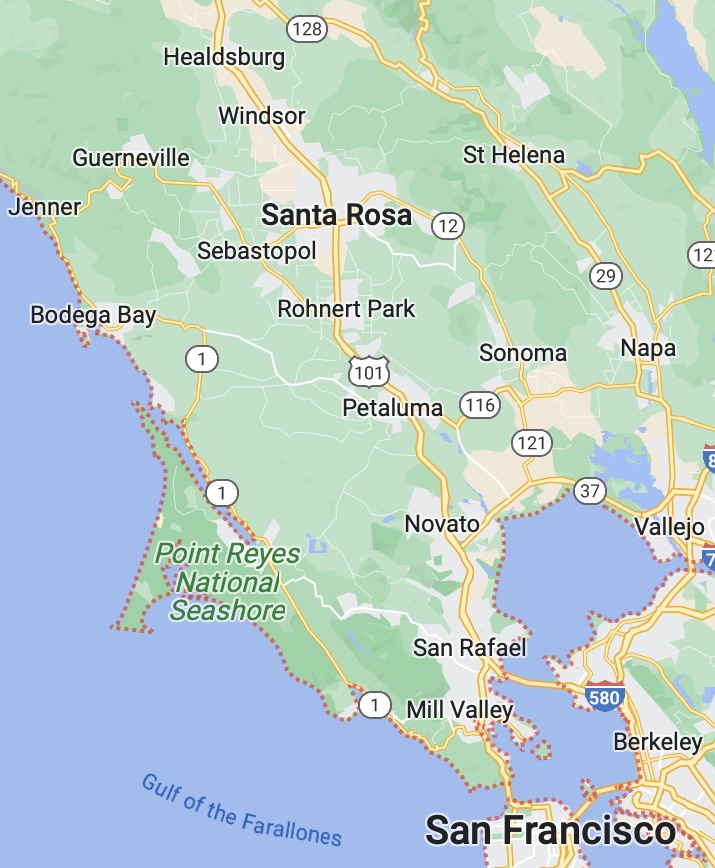
In addition to San Francisco, we represent real estate clients in Healdsburg, Sonoma, Santa Rosa, Guerneville, Petaluma, Windsor, Occidental, Sebastopol, Napa, St Helena, Calistoga, Yountville, Novato, Mill Valley, San Rafael and surrounding towns. If you are considering buying or selling a home in Wine Country, Marin, or San Francisco, my team and I are here and ready to help!

Now representing clients in San Francisco, Marin, Sonoma, and Napa